
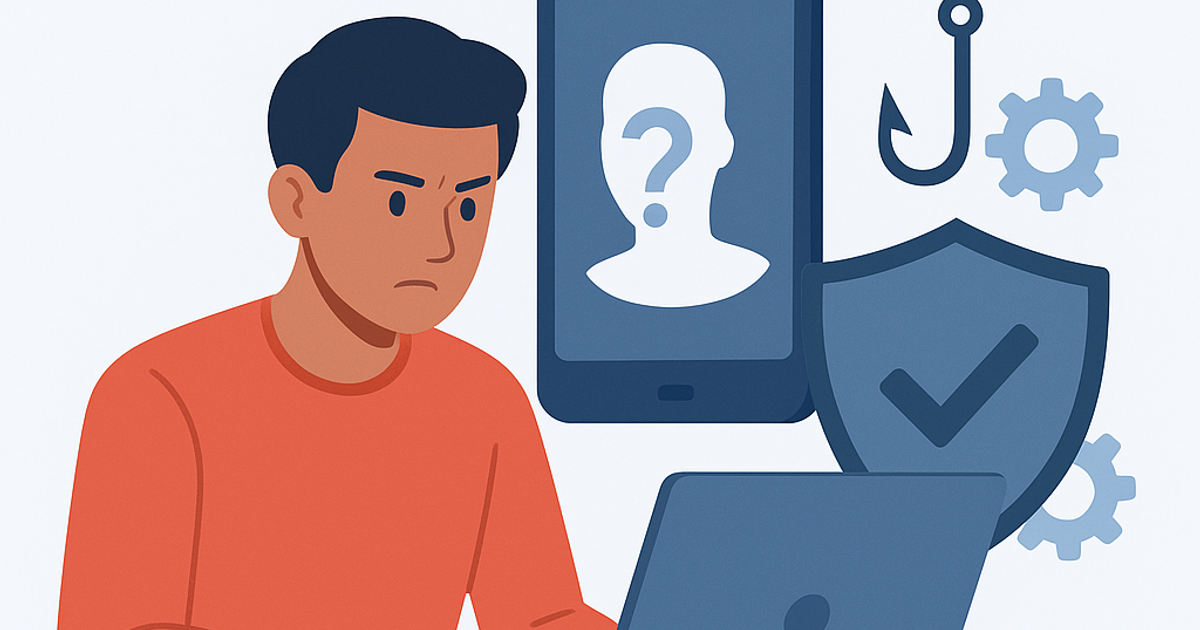

Remote assessments and interviews have unlocked speed and scale for hiring and learning—but they’ve also opened the door to a new generation of cheating tools. What started with simple answer‑sharing has evolved into AI tools that can draft perfect essays or solve coding challenges in seconds, screen‑sharing and collaboration apps that quietly involve a ‘helper’ off‑camera, deepfake video and audio that can spoof a real candidate, and proxy interviews where someone entirely different shows up on camera.
Many assessment platforms were never designed for this reality. Security often lives as an add‑on, not a core feature. Policies and playbooks lag behind the tools cheaters use. To maintain trust with candidates, customers, and regulators, it’s no longer enough to ‘detect cheating when it happens.’ You need to design your platform to be resilient to whatever comes next.
This guide lays out how to future‑proof your assessment and interview experience so you can stay ahead of the next wave of cheating tools—without turning your process into a surveillance nightmare.
The New Cheating Landscape: Beyond Simple Answer‑Sharing
Before you can future‑proof your platform, you need a clear view of the threats. Today’s cheating ecosystem spans several categories.
AI‑Assisted Content and Code
LLMs and code assistants can generate essays, responses, and code that look human, even under time constraints. Candidates can pipe questions into an AI model during the assessment or prep high‑quality responses in advance. The risk is that outcome‑based assessments may not reflect the candidate’s own capability.
Collaboration and Shadow Helpers
Screen‑sharing and remote‑control apps allow a more skilled person to ‘ghost’ the assessment from another device. Messaging tools and second screens enable real‑time back‑channel coaching. You think you’re evaluating one person; in reality, you’re evaluating a group—or the person behind the person.
Proxy and Impersonation
Proxy interviews put a different individual on camera in place of the real candidate. Document and identity fraud can involve borrowed or falsified IDs, and deepfakes can, in some cases, spoof the appearance or voice of another person. These attacks create serious compliance, safety, and reputational risk.
Old Cheating, New Channels
Note‑passing and answer‑sharing now happen via private groups, forums, and messaging apps. ‘Question banks’ of past assessments can circulate quickly once a test goes live, eroding the validity of your assessment over time.
To future‑proof your platform, you need an architecture and operating model that assumes this threat landscape will keep getting more sophisticated.
Principle 1: Design for Integrity as a First‑Class Requirement
The first step in future‑proofing is mindset: integrity can’t be an afterthought or a plug‑in. It must be a first‑class design requirement alongside UX, performance, and accessibility.
Treat integrity as a non‑negotiable product pillar. For every roadmap initiative, ask how a feature might be abused, what signals you could collect to detect misuse without over‑collecting data, and what the acceptable risk threshold is for that workflow. Bake these questions into product requirements, not just security reviews.
At the same time, align integrity with experience. Future‑proofing doesn’t mean turning every assessment into an interrogation. Low‑stakes activities can use lighter controls, while high‑stakes events get stronger verification and monitoring. Candidates should understand why checks are in place and how their data is used, so protections feel fair rather than punitive.
Principle 2: Build a Flexible Risk Framework, Not One‑Off Rules
Static rules won’t survive the next wave of tools. You need a risk‑based framework that can adapt as new behaviors emerge. Start by mapping risk by use case, classifying each assessment or interview type by impact, cheating incentive, and existing controls.
From there, standardize risk tiers. For example, Tier 1 for low‑risk practice and training, Tier 2 for moderate‑risk internal assessments, and Tier 3 for high‑stakes hiring and certifications. For each tier, define baseline controls such as identity verification level, proctoring requirements, browser and environment constraints, and data retention and audit requirements.
When new cheating tools appear, you tune the tier’s control set, not hundreds of individual tests.
Principle 3: Invest in Adaptive, AI‑Driven Proctoring
Manual monitoring alone can’t keep up with modern cheating behaviors. Future‑proof platforms pair human review with AI‑driven proctoring and anomaly detection.
Look for multi‑signal analysis that brings together video, audio, screen activity, keystrokes, and other telemetry. Favor behavioral baselines that learn what ‘normal’ looks like for specific assessments or cohorts and flag true anomalies. And insist on explainable alerts, with clear, reviewable evidence for each flag.
Crucially, keep humans in the loop. AI should be a triage layer, not a judge. It surfaces suspicious patterns; trained reviewers make the final call. Candidates should have a way to contest decisions through a structured review process. And policies and UI should explain what’s being monitored and why, which reduces anxiety and builds trust.
Principle 4: Make Identity and Environment Verification Modular
Cheating tools often exploit weak identity and environment checks. Your platform should support modular, upgradable controls you can dial up or down by risk tier.
On the identity side, that might mean lightweight checks like email or phone verification for low‑stakes use cases, and more robust flows like government ID plus selfie match for higher‑stakes assessments. You can also add step‑up verification when risk signals spike.
For the environment and device, consider optional controls such as secure browsers or lockdown modes for high‑stakes tests, second‑screen and screen‑sharing detection, and network and device fingerprinting to spot suspicious patterns. The aim is configurability: your team can adjust controls as new cheating tools become mainstream.
Principle 5: Design Assessments That Are Harder to Game
Technology alone can’t save an assessment that’s trivial to memorize or outsource. Future‑proofing means re‑thinking assessment design.
Rotate and refresh question pools by building large item banks with equivalent difficulty and topic coverage, rotating questions so candidates see different combinations, and using data to retire over‑exposed items. Focus on higher‑order skills through scenario‑based questions, multi‑step problem‑solving, and real‑world case studies that are harder to fake with simple AI tools.
Where appropriate, use time‑ and context‑bound tasks: limit time so candidates can’t comfortably outsource every answer, and tie assessments to context you control, such as internal data or proprietary processes that off‑the‑shelf tools don’t know. The goal is to make cheating more effort than it’s worth.
Principle 6: Close the Loop With Analytics and Continuous Improvement
Future‑proof platforms treat integrity as an ongoing cycle, not a one‑time setup. Integrity dashboards should expose metrics like the percentage of sessions with flags by assessment type, most common flag types, resolution outcomes, and trends over time.
Use this data to refine controls. When you detect emerging patterns—say, a new form of collaboration cheating on coding tests—you can adjust risk tiers, add or tune proctoring rules, update question pools or formats, and trigger targeted communication or retraining for internal teams. A feedback loop between assessment data, integrity signals, and product decisions is what truly future‑proofs your platform.
Change Management: Bringing Stakeholders and Candidates With You
Even the best integrity architecture will fail if stakeholders aren’t aligned. Internally, product and engineering teams need to understand integrity requirements; legal and compliance must sign off on monitoring practices; TA and L&D teams need to know how to interpret integrity reports; and executives should see integrity as a brand and risk priority, not just a cost center.
Create simple playbooks that show who does what when cheating is suspected or confirmed.
On the candidate side, transparency reduces friction and improves trust. Explain why additional checks exist, clarify what’s monitored and for how long, and provide guidance and practice environments so candidates can test their setup before high‑stakes events. Future‑proofing is as much about culture and trust as it is about technology.
How Integrity‑Focused Platforms Stay Ahead
Platforms that take integrity seriously—and embed capabilities like AI‑assisted proctoring, multi‑signal fraud detection, and integrity analytics—end up with several advantages. They make stronger, more defensible hiring and assessment decisions, reduce the risk of scandal and compliance breaches, and tell a differentiated story in the market when ‘remote‑friendly’ is table stakes.
Instead of constantly playing catch‑up, you’re building an ecosystem that anticipates change and adapts quickly.
Conclusion: Start Future‑Proofing Now, Not After the Next Incident
Cheating tools will keep getting better. The question isn’t whether you can block every possible method—it’s whether your platform is designed to adapt.
To future‑proof your assessment platform, treat integrity as a core product pillar, use a risk‑tiered framework so you can dial protections up or down intelligently, combine AI‑driven proctoring with human review and clear policies, make identity and environment checks modular and upgradable, design assessments that are intrinsically harder to game, and build analytics and feedback loops so you can keep improving.
The organizations that act now will be the ones still trusted when the next wave of cheating tools arrives.
FAQs
Isn’t using more proctoring enough to stop modern cheating?
Proctoring is a key component, but on its own it can’t address all threats—especially AI‑assisted content, collaboration tools, and question leakage. A resilient strategy combines better assessment design, risk‑tiered controls, identity verification, and continuous integrity analytics so you can catch both known and emerging patterns.
How do we balance candidate privacy with stronger monitoring?
Start by clearly defining what you monitor and why, minimize data collection to what’s necessary for integrity, and keep humans involved in reviewing AI‑generated alerts. Transparent policies, consent flows, and reasonable data‑retention windows help you uphold both fairness and privacy.
What’s the quickest win if we’re starting from a low‑maturity setup?
Begin with a structured risk assessment of your highest‑stakes assessments, then add modular controls where risk is greatest—ID verification, AI‑assisted proctoring, and better item rotation. You don’t need to rebuild everything; prioritize the top 10–20% of high‑impact use cases first.
How can we tell if cheating tools are already affecting our results?
Look for anomalies such as sudden score spikes, unusually fast completion times, identical response patterns, or repeated device and network fingerprints across many candidates. Integrity analytics that surface these patterns alongside performance data make it much easier to spot emerging issues.
Will AI tools make traditional assessments obsolete?
AI is changing how assessments are designed, but it doesn’t make measurement obsolete. It pushes platforms toward higher‑order skills, more authentic tasks, and smarter monitoring. Organizations that build integrity and adaptability into their assessment platforms will continue to be trusted even as tools evolve.
How often should we review and update our integrity controls?
At a minimum, conduct a formal review of your integrity controls annually, and more frequently for high‑stakes programs. In practice, your integrity analytics should drive continuous micro‑adjustments as you see new behaviors—adding new checks, tuning thresholds, and revising content when needed.